


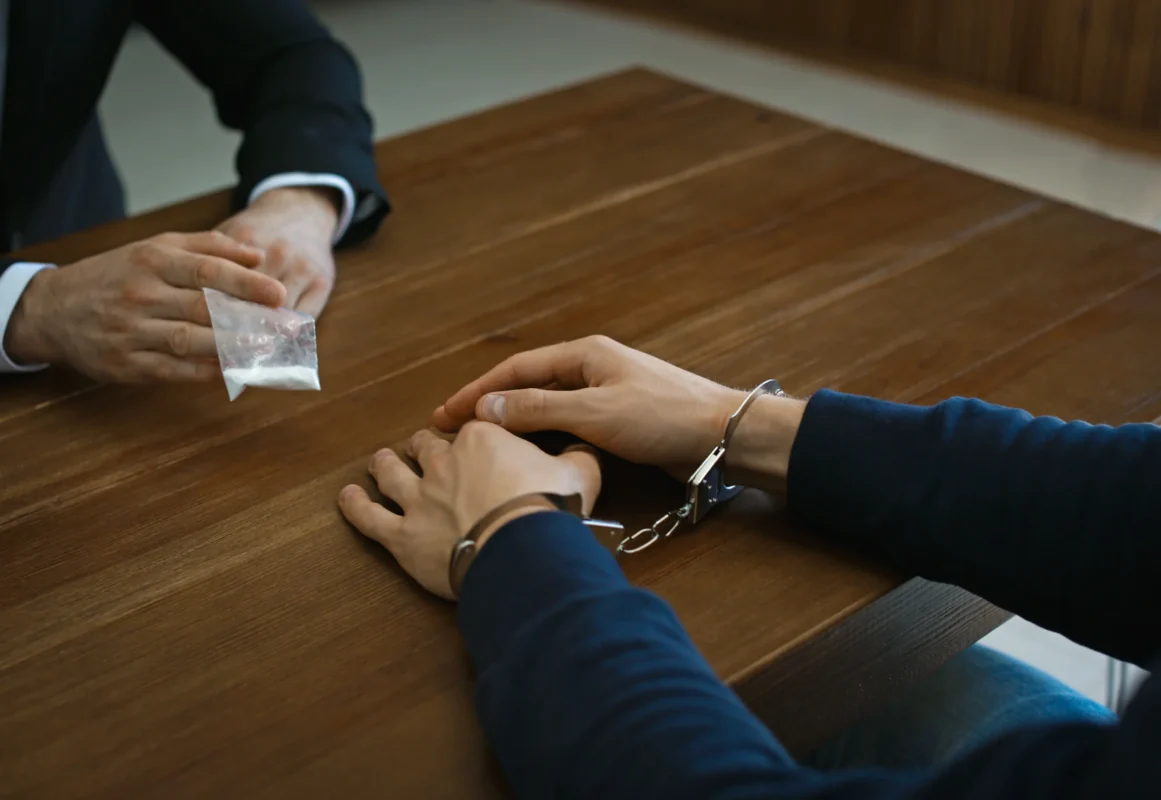
The short answer: A simple possession drug charge in South Carolina means you are accused of having a controlled substance for personal use, not for selling or distributing it. Quantity and packaging matter because possessing more than a set amount (e.g., more than one ounce of marijuana or more than one gram of cocaine) can be treated as evidence of intent to distribute, which is a felony. Being charged is not the same as being convicted, and defenses, diversion programs, and conditional discharge may be available to you.
Few things rattle a person like a drug charge and a head full of questions about your job, your record, and your freedom. If you’re reading this, you’re trying to figure out what you’re actually up against. That’s a smart first step. What follows is a plain, judgment-free look at how simple drug possession charges work in South Carolina and what your options may be.
In this article, our experienced Greenwood drug crime lawyers discuss:
– What counts as simple possession
– How South Carolina classifies controlled substances
– Penalties by substance type
– Common defenses to a possession charge
– How to have charges dropped or reduced
What Counts as a Simple Possession Drug Charge in South Carolina?
Simple possession means you are accused of having a controlled substance for personal use, not to sell or distribute it. The law draws a line between simple possession and possession with intent to distribute (PWID), and the difference turns on more than what’s in your pocket.
Prosecutors weigh quantity, packaging, and the surrounding circumstances. State law sets weight thresholds that can change a possession case into a distribution case. Possession of more than one gram of cocaine, two grains of heroin, or 28 grams (one ounce) of marijuana is treated as prima facie evidence of violation of the distribution provision. Scales, multiple baggies, large amounts of cash, or text messages can also be used to argue distribution, even when the amount is small.
Why does this matter? PWID is a felony, while most simple possession offenses are misdemeanors. Don’t assume the label on your paperwork is the final word. Being charged is not the same as being convicted. Contact Pinckney Law for a consultation to understand what you’re really facing.
How Does South Carolina Classify Controlled Substances?
South Carolina classifies controlled substances into five schedules, and the schedule often determines the penalty. A controlled substance is a drug in Schedules I through V under state law. Schedule I covers drugs the state views as having a high potential for abuse and no accepted medical use, including heroin, LSD, and marijuana. Schedules II through V include drugs with accepted medical uses, with Schedule II being the most tightly controlled and Schedule V the least. Many prescription medications fall somewhere in these categories.
What Are the Penalties for Simple Drug Possession?
Penalties for a simple possession drug charge hinge on the substance and whether it’s your first offense. Most first-offense charges are misdemeanors, but the consequences vary widely.
– Marijuana: Possessing one ounce or less is a misdemeanor punishable by up to 30 days in jail or a fine of $100 to $200 for a first offense.
– Cocaine: A first offense is a misdemeanor punishable by up to three years, a fine of up to $5,000, or both.
– Methamphetamine or cocaine base (crack cocaine): Possessing less than one gram is a misdemeanor punishable by up to three years for a first offense under Section 44-53-375(A).
– Prescription drugs and other substances: It is unlawful to possess a controlled substance without a valid prescription. A Schedule I or II narcotic or LSD can carry up to two years for a first offense, while many other scheduled drugs carry up to six months.
Even a misdemeanor conviction can follow you for years, hurting your job prospects, housing, and licenses. If you hold a visa or green card, a drug conviction can also carry immigration consequences, including removal.
What Are Common Defenses to Drug Possession Charges?
Several defenses can apply to a drug possession charge, and the right one depends on the facts. Being accused doesn’t mean the state can prove it.
– Challenging the search. The Fourth Amendment protects you from unreasonable searches and seizures. If officers searched your car, home, or body without a warrant, your consent, or another valid legal basis, the evidence may be suppressed.
– Questioning possession. The state has to prove the drugs were yours. When substances turn up in a shared car or home, “constructive possession” can be hard to prove.
– Disputing knowledge. You generally cannot be convicted of possessing something you didn’t know you had.
How Can You Have Drug Possession Charges Dropped or Reduced?
One of the most common questions we hear is how to get drug possession charges dropped, and South Carolina offers several paths, especially for first-time offenders.
– Pretrial Intervention (PTI). Individuals charged with possession may be permitted to enter the pretrial intervention program under Sections 17-22-10 through 17-22-160, which may result in dismissal upon completion.
– Conditional discharge. Under Section 44-53-450, for someone not previously convicted of a drug offense, the court can defer proceedings without entering a guilty judgment, place you on probation, and dismiss the charge once you complete the terms of probation. You can only use this option once.
– Expungement. A first-offense simple possession conviction may be expunged three years after you complete your sentence.
None of these are automatic, and eligibility often depends on how your case is handled from day one. Pinckney Law offers consultations, and bilingual services are available for clients who need them.
Frequently Asked Questions About Simple Possession Charges in South Carolina
Is simple possession a felony in South Carolina?
Most first-offense simple possession charges are misdemeanors, not felonies. Possession with intent to distribute, though, is a felony, and quantity or packaging can push a case in that direction.
Will a drug possession charge go on my record?
A charge and conviction can both show up on your record. Diversion programs and conditional discharge can lead to dismissal and eventual expungement, keeping a one-time mistake from defining your future.
Can I be charged if the drugs weren’t mine?
Yes, you can be charged, but that doesn’t mean you will be convicted. The state has to prove you knowingly possessed the substance, which is a tall order in shared spaces like a car with several passengers.
Do I need a lawyer for a first-offense possession charge?
Even a first offense carries real consequences, and eligibility for programs like PTI or conditional discharge often turns on early decisions in your case. Speaking with an attorney helps protect your rights and your options.
A simple possession drug charge can feel overwhelming. But you have rights. The burden sits with the state to prove its case. The attorneys at Pinckney Law defend individuals facing drug possession charges throughout Greenwood, Greenville, and Upstate South Carolina, with offices at 414 Monument St B in Greenwood and 4601 White Horse Rd in Greenville. Being charged is not the same as being convicted. Contact Pinckney Law for a consultation.