


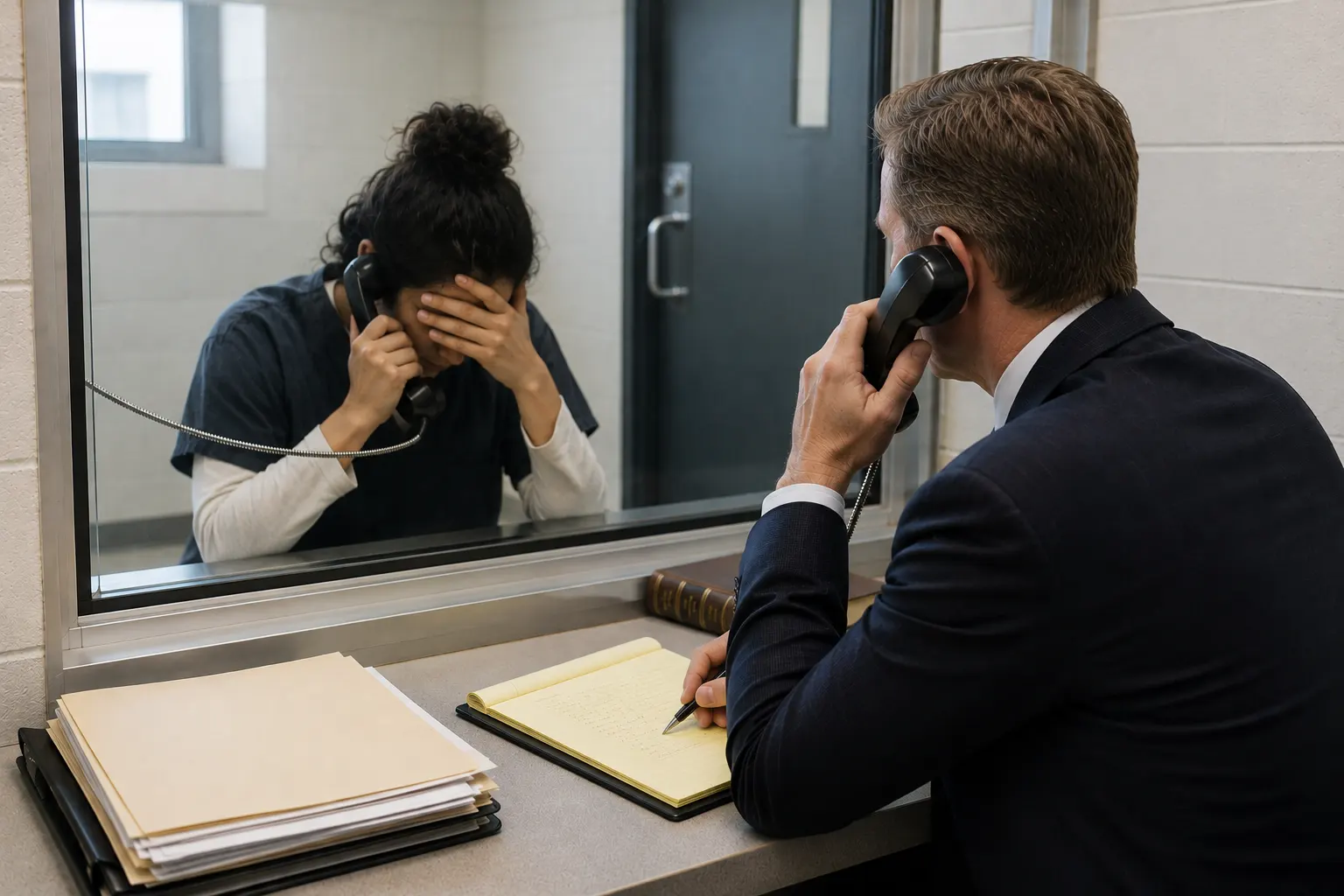
When someone faces murder charges in South Carolina, their entire future hangs in the balance. The state’s justice system moves swiftly and aggressively in homicide cases, making experienced legal representation essential from the moment an arrest occurs. At the Law Office of Matthew P. Pinckney, we strive to protect the rights of those accused of serious crimes throughout Greenwood County and the rest of South Carolina.
Murder charges carry the most severe penalties under South Carolina law, including life imprisonment and potential death penalty sentences. The prosecution will assign its most experienced attorneys to these cases, backed by extensive resources and investigative teams. You need a defense team that matches their intensity and expertise. Contact our experienced defense lawyers today.
South Carolina Murder Laws and Charges
Murder is defined in S.C. Code § 16-3-10 as “the killing of any person with malice aforethought, either express or implied.” In plainer terms, this means the killing was done with a wrongful intent (“malice”). This intent must exist before (“aforethought”) the act that caused the death, but the intent does not have to be proven by direct evidence. Instead, malice can be inferred from the circumstances, such as using a deadly weapon, making prior threats, or showing hostility toward the victim. To obtain a conviction in a murder case, South Carolina prosecutors must prove beyond a reasonable doubt that:
- The defendant caused the death of another human being;
- The killing was unlawful; and
- It was committed with malice aforethought.
A conviction for murder is a felony punishable by a mandatory minimum of 30 years’ imprisonment up to life in prison, or even the death penalty if aggravating circumstances under S.C. Code § 16-3-20(C) are proven. Aggravating circumstances include, among others, murder committed during kidnapping, armed robbery, burglary, or involving multiple victims.
Understanding Other Homicide Offenses in South Carolina
Other homicide offenses are codified under different sections of South Carolina law. Here is an overview of these charges:
- Voluntary Manslaughter: Voluntary manslaughter (S.C. Code § 16-3-50) applies when a killing occurs in sudden heat of passion upon sufficient legal provocation, without malice, and carries a penalty of 2 to 30 years.
- Involuntary Manslaughter: Involuntary manslaughter (S.C. Code § 16-3-60) applies when death results from criminal negligence. It is punishable by up to 5 years in prison.
In all homicide prosecutions, the absence of legal justification (such as self-defense, defense of others, or accident) is an essential element.
Building Your Defense Strategy
Every murder case requires a thorough investigation and a customized defense approach. Our Greenwood murder defense lawyers examine every piece of evidence, interview witnesses, and challenge the prosecution’s narrative at every turn. We may also work with forensic experts, private investigators, and medical professionals to build the strongest possible defense.
Self-defense claims require proving that you reasonably believed deadly force was necessary to prevent imminent death or great bodily harm. South Carolina’s Protection of Persons and Property Act, also known as the Stand Your Ground law, eliminates the duty to retreat in certain situations where you have a right to be present.
Alibi defenses focus on proving you were elsewhere when the alleged crime occurred. This requires gathering documentation, witness testimony, and sometimes technological evidence, like cell phone records or surveillance footage. Our Greenwood murder defense attorneys work to gather and thoroughly evaluate all available evidence to assess your whereabouts during the relevant time period.
Evidence Challenges and Constitutional Rights
Law enforcement agencies sometimes make mistakes during murder investigations that can compromise the entire case. We scrutinize every aspect of the investigation process, from the initial response to evidence collection and witness interviews. Constitutional violations can lead to the suppression of crucial evidence.
Fourth Amendment protections guard against unreasonable searches and seizures. If police conducted searches without proper warrants or violated the scope of valid search warrants, we can file motions to exclude illegally obtained evidence.
Fifth Amendment rights protect against self-incrimination and guarantee due process. Police must provide Miranda warnings before custodial interrogation. Violations of these rights can result in suppression of statements and confessions, often weakening the prosecution’s case significantly.
Common investigative errors that we challenge include:
- Contaminated crime scenes and evidence handling mistakes
- Coercive interrogation techniques and Miranda violations
- Unreliable eyewitness identification procedures
- Flawed forensic analysis and expert testimony
The Role of Expert Witnesses
Modern murder cases often hinge on expert testimony in various fields. When appropriate, our Greenwood murder defense lawyers can work with qualified experts to assess the prosecution’s evidence and help evaluate possible defenses. Forensic pathologists can dispute cause of death determinations, while ballistics experts can question firearms evidence.
DNA evidence requires scrutiny, despite its reputation for reliability. Chain of custody issues, contamination, and interpretation errors can all affect DNA results.
Mental health experts play crucial roles in cases involving diminished capacity or insanity defenses. South Carolina follows the M’Naghten rule for insanity, requiring proof that the defendant could not distinguish right from wrong due to mental disease or defect.
Penalties and Sentencing Considerations
The state considers various aggravating and mitigating factors during sentencing. Aggravating factors that can increase penalties include prior violent convictions, commission of murder during other felonies, and killing of law enforcement officers or other protected individuals.
Mitigating factors that our legal team can present include:
- Lack of prior criminal history
- Mental health issues or developmental disabilities
- Circumstances of the offense that reduce culpability
- Cooperation with law enforcement during the investigation
Pre-Trial Proceedings and Bail Considerations
Murder charges typically result in denial of bail or issuance of extremely high bond amounts. Nevertheless, South Carolina law allows for bond hearings where we can argue for a reasonable bond based on various factors. Our defense attorneys present evidence of community ties, lack of flight risk, and absence of danger to the public to try to secure a reasonable bond.
Grand jury proceedings determine whether probable cause exists to proceed with murder charges. While defendants cannot present evidence during grand jury hearings, we can prepare for potential indictments and begin building defenses early in the process.
Preliminary hearings also determine whether there is probable cause for a case to proceed. While not a trial, they can serve as a useful tool for gathering information about the prosecution’s case early on.
Contact Us Today
Facing murder charges requires immediate action from an experienced defense lawyer who will fight tirelessly for your rights. At Pinckney Law, we bring extensive criminal defense experience to every case, ensuring that you receive the aggressive representation you deserve. Time is critical in murder cases, as evidence can disappear and witnesses’ memories fade. Contact our dedicated legal team today to begin building your defense and protecting your future. From our Greenwood office, we defend murder charges, voluntary manslaughter charges, and involuntary manslaughter charges throughout the entire state of South Carolina.